
If you’re thinking about straightening your teeth, you’ve probably come across two familiar options: Invisalign® and traditional braces.
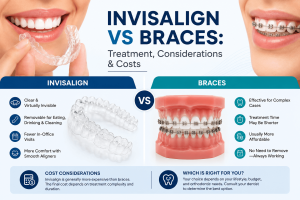
They can both move teeth into better alignment, but they go about it in different ways. Invisalign® uses a series of clear, removable aligners, while braces use brackets and wires that stay attached to your teeth throughout treatment.
For some people, being able to take their aligners out for meals and keep treatment relatively discreet is important. Others prefer having a fixed appliance that stays in place. Then there are the clinical considerations, which are the most important part of the conversation.
So, if you’re comparing Invisalign® vs Braces, here’s a closer look at how they work, what living with each option is like, what can affect Invisalign® cost, and how your dentist can help you decide which approach may be suitable.
So, What Is Invisalign® Exactly?
Invisalign® is an orthodontic treatment that uses a series of clear, custom-made aligners to gradually move the teeth. Each aligner is designed to make small adjustments to the position of your teeth, with the sequence planned around the movements required in your particular case.
One of the main differences from braces is that Invisalign® aligners can be removed. You’ll take them out when eating, drinking anything other than water and brushing your teeth, then put them back in afterwards.
Before treatment begins, your dentist will look at your teeth, gums and bite to determine whether Invisalign® is appropriate for you. Photographs and digital scans may also be taken to help plan the treatment.
Once your aligners are ready, you’ll move through the series according to the instructions provided. You’ll also have regular appointments so your dentist can check how your treatment is progressing.

How Do Traditional Braces Work?
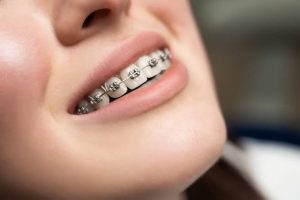
Traditional braces use brackets attached to the teeth and connected by wires. Unlike Invisalign® aligners, they stay in place throughout treatment.
That means you don’t have to remember to put them back in after eating or brushing. The trade-off is that cleaning around the brackets and wires takes a little more care, and there may be certain foods you’re advised to avoid or modify to reduce the chance of damaging the appliance.
Your braces will be adjusted at regular appointments as your teeth gradually move. It’s quite normal to no
tice some pressure or tenderness after braces are first fitted or adjusted, although your dentist can advise you if you have any concerns.
Braces have been used in o
rthodontic treatment for many years and may be appropriate for a wide range of alignment concerns.
Invisalign Vs Braces: What’s the Difference?
The most obvious difference is that Invisalign® aligners are clear and removable, while braces are fixed to the teeth. The practical differences can also make one option more appealing to you than the other.
| Invisalign® | Traditional braces | |
|---|---|---|
| Appliance | Series of clear, removable aligners | Fixed brackets and wires |
| Appearance | Less noticeable when worn | More visible |
| Removability | Can be removed for eating and oral hygiene | Remains attached throughout treatment |
| Oral hygiene | Teeth can be brushed and flossed normally when aligners are removed | Requires careful cleaning around brackets and wires |
| Food | Aligners are removed before eating | Certain foods may need to be avoided or modified |
| Appointments | Regular reviews to monitor progress | Regular reviews for monitoring and adjustments |
| Treatment requirements | Requires consistent wear as directed | Requires careful care of the fixed appliance |
Neither option is automatically better. What matters is whether the treatment can address your orthodontic concerns and whether its requirements fit comfortably into your everyday life.
Which Option Might Be Suitable for You?
Invisalign® may be considered for concerns such as crooked or crowded teeth, spacing and certain bite problems. Traditional braces can also be used for a broad range of orthodontic concerns.
Your dentist will look at the position of your teeth, your bite, the health of your teeth and gums and the type of movement required. Your ability to follow the treatment instructions is another practical consideration.
With Invisalign®, for example, the aligners are removable, so you’ll need to be comfortable wearing them consistently for the recommended amount of time. If that doesn’t sound realistic for your routine, fixed braces may be worth discussing.
Ultimately, the decision should be based on what your teeth need rather than simply which appliance you prefer the look of.
What Goes into an Invisalign® Treatment Plan?
There is quite a bit of planning behind a series of clear aligners.
Your dentist may take photographs, digital scans and other records to understand your current alignment and plan the movements required. If Invisalign® is appropriate, your custom-made Invisalign® aligners are then produced according to your Invisalign® treatment plan.
Each aligner forms part of the sequence and is designed to make gradual changes to the position of your teeth. You’ll have regular appointments during treatment so your dentist can monitor your progress and determine whether any changes are needed.
The length of treatment varies between patients. More straightforward cases may take less time, while cases involving more complex tooth movements can take longer.
How Much Does Invisalign® Cost?
There isn’t one fixed Invisalign® cost, because treatment can look quite different from one person to another.
The fee may depend on the complexity of your orthodontic concerns, the number of aligners required, the expected treatment time and the appointments and follow-up involved. Some cases may also require additional aligners or other treatment as the teeth respond.
The cost of braces can vary for similar reasons, although the treatment and fee structure are different.
This is why it’s difficult to compare Invisalign® and braces simply by looking at the starting price. Two people with similar-looking alignment concerns may still require quite different treatment.
Once your teeth have been assessed, your dentist can explain the proposed treatment, expected timeframe and associated fees.
What Should You Consider Before Treatment?
Both Invisalign® and braces have potential risks and limitations.
As your teeth move, you may experience temporary pressure, tenderness or sensitivity. Maintaining good oral hygiene is particularly important during orthodontic treatment, as plaque build-up can increase the risk of tooth decay and gum inflammation.
With Invisalign®, you’ll need to wear the aligners consistently as directed. Not wearing them for the recommended amount of time may affect the progress of treatment.
With braces, brackets or wires can sometimes cause irritation to the cheeks, lips or gums, or become loose or damaged. You’ll also need to take care when eating and cleaning around the appliance.
Your dentist will explain the risks and limitations relevant to your treatment and how to care for your teeth throughout the process.
Finding the Right Approach for Your Smile
It’s easy to focus on the fact that Invisalign® is less noticeable, or to choose braces simply because they’re familiar. But those are only part of the decision.
Your orthodontic needs, oral health, bite, treatment goals and everyday routine all have a role to play. A consultation gives your dentist the opportunity to look at these factors together and explain which options may be appropriate, along with the treatment involved, potential risks and costs.
If you’re considering Invisalign® vs Braces, it’s worth understanding what each option would mean for your particular teeth before making a decision.
Frequently Asked Questions
Is Invisalign® as effective as braces?
Invisalign® can be used to address a range of orthodontic concerns, while traditional braces can also be used for many different types of tooth movement. Whether Invisalign® is appropriate depends on the individual case and the movements required.
How long does Invisalign® treatment take?
It varies from person to person. Treatment time depends on the alignment concerns being addressed and how much the teeth need to move. Your dentist can give you a better idea of the expected timeframe once your teeth have been assessed.
How many hours a day do I need to wear Invisalign® aligners?
Your dentist will give you specific instructions based on your treatment plan. Because Invisalign® aligners are removable, wearing them consistently for the recommended amount of time is an important part of treatment.
Can I eat while wearing Invisalign® aligners?
You’ll need to remove your Invisalign® aligners before eating and before drinking anything other than water. Once you’ve finished eating and cleaned your teeth, you can put them back in.
Is Invisalign® painful?
You may notice some pressure or temporary discomfort when you first start treatment or change to a new set of aligners. Braces can cause similar tenderness, particularly after they are fitted or adjusted. If you’re experiencing ongoing or significant discomfort, speak with your dentist.
Do I need to wear a retainer after Invisalign® or braces?
Retainers are commonly recommended after orthodontic treatment to help maintain the new position of your teeth. Your dentist will explain which type of retainer is appropriate for you and how it should be worn.
Can adults have Invisalign®?
Yes. Invisalign® may be suitable for adults as well as younger patients, provided their teeth and gums are healthy and their orthodontic concerns can be addressed with clear aligners. Your dentist can assess whether it is an appropriate option for you.
Which is cheaper, Invisalign® or braces?
There isn’t one answer that applies to everyone. The cost of Invisalign® or braces depends on factors such as the complexity of treatment and how long it is expected to take. A personalised assessment will give you a clearer idea of the likely cost.
Can Invisalign® fix crowded teeth?
Invisalign® may be suitable for certain types and degrees of crowding. Your dentist will look at how your teeth are positioned, your bite and your overall oral health before deciding whether clear aligner treatment is appropriate.